
How Relationship Breakdown Affects Men's Mental Health

Date: Friday 28 Jan 2022
A new UBC study confirms that when men transition out of relationships, they are at increased risk of mental illness, including anxiety, depression and suicide.
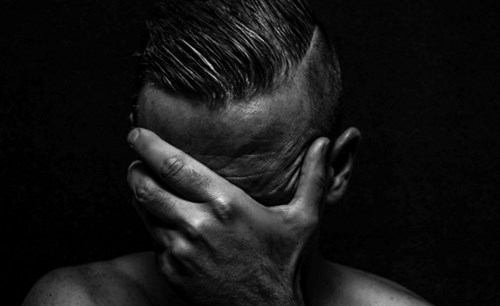
“Most men experienced the onset or worsening of mental illness symptoms during a distressed relationship or following the breakdown of a relationship,” says the study’s lead author, Dr John Oliffe, a Canada Research Chair and UBC professor of nursing whose work focuses on men’s mental health. He noted that marital separation quadruples the risk of male suicide and suggests that distressed relationships, as well as separation and divorce, contribute to men’s mental health challenges.
Dr Oliffe and the team at UBC’s Men’s Health Research Program interviewed 47 men about their experiences with the breakdown of an intimate partner relationship. When faced with conflict in their relationships, men tended to downplay issues, causing the relationship to fracture even further.
“Stereotyped masculinity plays a role in how men react to a broken relationship,” says Dr Oliffe, who also leads UBC’s Reducing Male Suicide research excellence cluster. “For example, men’s uncertainty about how to articulate and problem-solve in the relationship context resulted in many men isolating rather than reaching out for help. Most men in the study were battling with transitions in the partnership—like bereavement, parenting or infidelity—and their primary goal was to avoid conflict.”
The study also found that men who were in distress following their breakup used substances, including alcohol, to cope with feelings such as anger, regret, sadness, shame and guilt. This is in addition to the immense uncertainty about what life could look like with reduced access to children, financial challenges, and the loss of social connections.
Complicating these findings is the isolation and disruption caused by COVID-19 public health restrictions, which can lead to increased alcohol and substance use at home, and exacerbate conflict, leading to worsening mental health, Oliffe added.
On the positive side, the study revealed that following the breakdown of a relationship, men engaged a variety of resources to address their mental health needs.
“Help-seeking efforts among these men were wide-ranging and included individual or solitary efforts like exercise, reading and self-care, while other men tapped existing networks or extended their efforts to connect with support groups, or attended therapy,” notes Gabriela Montaner, the project lead and co-author on the article.
In thinking about the implications for services, she explained that while men tend to wait until a crisis happens before seeking help, they do invest considerable time and effort in moving on and understanding their role in the breakup. “We need to re-conceptualise men’s mental health promotion as legitimately including self-help, informal resources and male peer group services in addition to professional services.”
Dr Oliffe added, “For the longest time, we have treated separation and divorce as demographic data for examining risk factor potential in men’s mental illness and suicide. The current study findings provide important contexts and direction for getting upstream to assist men to build better relationships, and that is the focus of our current work with Movember.”
Content source: https://www.technologynetworks.com/neuroscience/news/how-relationship-breakdown-affects-mens-mental-health-357963